Extended edition
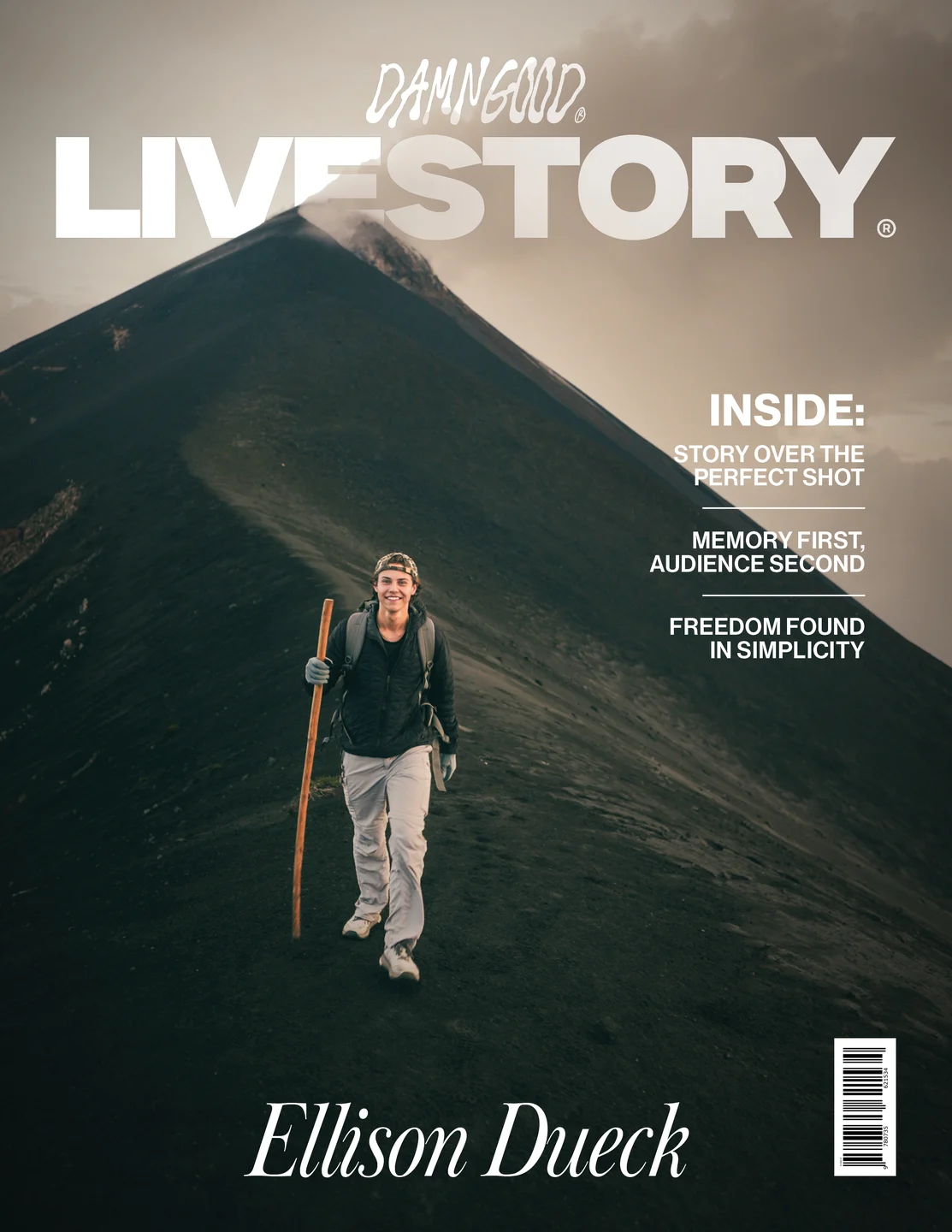
Ellison Dueck on Filming Humphreys Peak
One minute from a day on Humphreys Peak
Ellison Dueck had been thinking about climbing Humphreys Peak in Arizona for some time when The North Face contacted him about a holiday campaign. When the gear arrived, he already knew where he wanted to take it. Before he went up, he listened to a few of the songs he had been saving for a video. He likes to know something about how a film might feel before he sets out. Up on the mountain, he was willing to work out what to shoot as he went.
He estimates six to eight hours to hike up and back, and about an hour and a half of footage by the end. He was making a sixty-second video. At his desk, he put the clips on a drive and opened Premiere Pro. He went through what he'd shot, discarded the clips he couldn't use and started finding the order of the story around the song. He added a voiceover, corrected the colours and worked on the grade. For a few transitions he used the brief flare of light known as a film burn and gave each one a sound. The little things he had chosen to add had to belong to the same minute as the material he had kept.
When the brand came back with a single change, he took out one clip. He puts the polishing time for that minute at three or four hours. There had been a whole day of making decisions about what to record, followed by the quieter job of making a small fraction of it feel like the day he remembered. By then he had spent years working out how a moment felt in the first place and how much he could keep when he watched it back.
The first time he pressed record
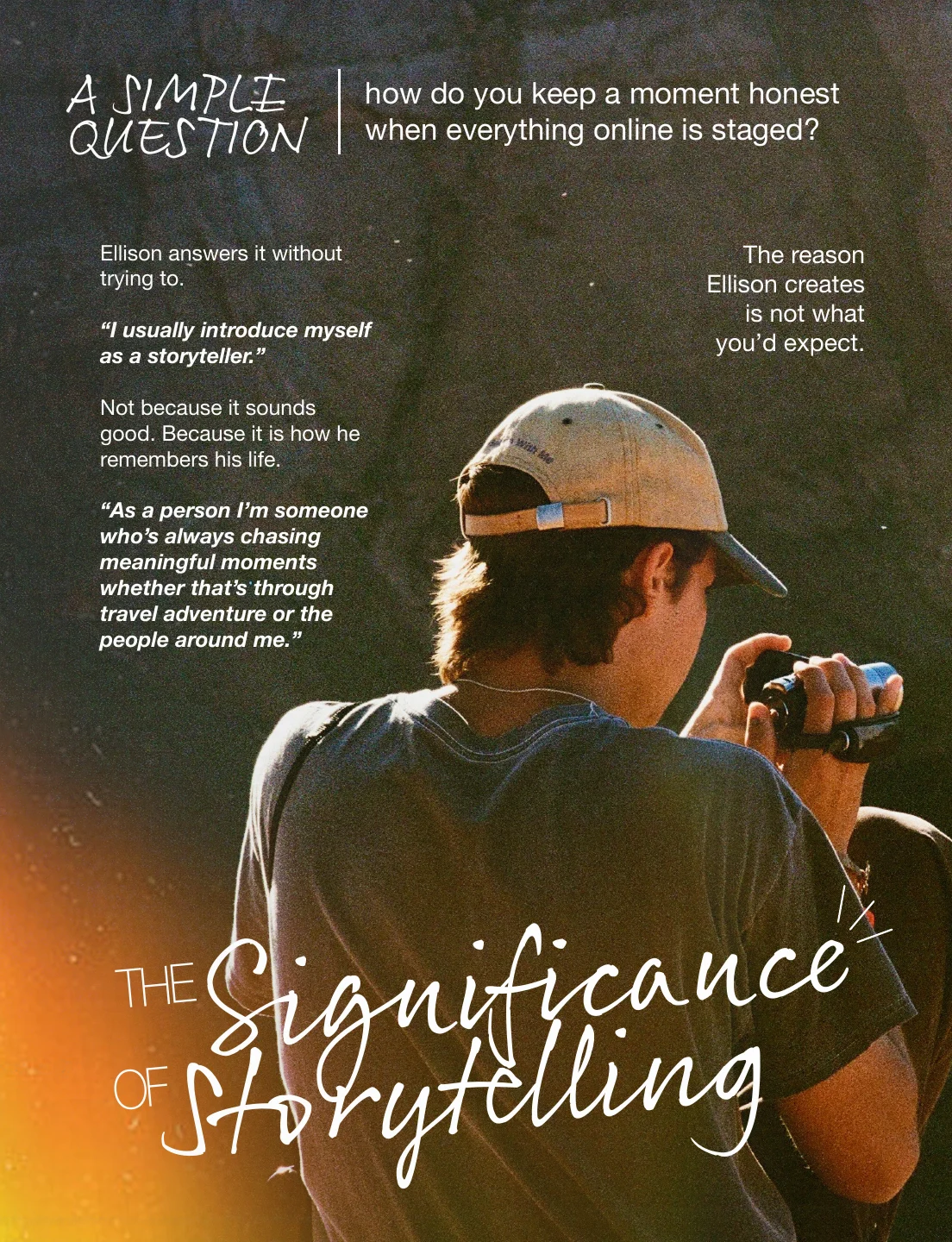
Before he had a camera, Ellison loved art class. It gave him time with a blank page and permission to put on it whatever came to mind. He liked drawing and building things as well as telling stories, and he could make something out of what he had been imagining or feeling. He was about nine or ten when he got the first camera he could call his own. He remembers the model, an inexpensive AKASO EK7000, and the first time he pressed record.
The interesting part was what he could do afterwards. He could play something back and be reminded of how it had felt while it was happening. A drawing could hold an idea he had once had. The little camera could take a moment he was in and give him a way to return to it. He explains the appeal in much the same terms now when he describes why he takes a camera on a trip.
“Even now, I still create for myself first,” he wrote when we asked what made him start sharing the videos. For a long time, putting them online meant he could keep a record of his life together in one place. He likes to think his future children might one day see who he was at this age, including what he loved, what challenged him and the things he was still working out. A film gives him a chance to show what that period was like from where he stood while it was happening.
When he begins planning a piece, he tends to start with the feeling he wants to preserve. It could be a place he has wanted to see, something that happens on an adventure or an unremarkable part of the day that catches his attention. Having that much in his head gives him something to work with. He can still take whatever camera seems right for the occasion and see what happens when he gets there.
The van he converted with his grandfather
By the time Ellison got his driving licence at sixteen, he had saved enough to buy a van. He puts the time he spent working in a kitchen at three or four years. In high school his attention was divided between the things he had to do there and the travelling he wanted to do when he could get away. The kitchen job gave him a way to put some of his time towards a trip he could actually take.
The summer after he bought the van, his grandfather helped him convert it. Having the van to travel in gave Ellison a say over where he could spend his time. After high school, he could take longer trips and spend more of those days filming. He talks about the van alongside his cameras when he describes the tools that help him make a film. It gets him to a place and gives him the means to stay a little longer, which can be as important to what he comes home with as the lens he has on the camera.
He likes to work with an old digital camera and 35mm film as well as his professional kit. He comes back to the cameras that make a moment feel lived-in to him. The difference matters when the material is ordinary. There might be a bit of road, the view from a stop or the people sitting round a fire. He wants to keep enough of the way it felt to be one of those people that somebody looking at the pictures can come along for a while.
A road trip made of quiet moments
One short trip gave him a few scenes of campfires, winding roads and roadside views. He set them to Every Breath You Take and made a video out of the quiet parts. When he filled in the questionnaire, he said it was his most watched video and put the views at over eleven million. It was only a small trip, and he singled it out when we asked which day of filming said something about him. He saw the response as one of the things that helped him think seriously about making films for a living.
He often opens a video on a candid moment. Sometimes there's a joke. Sometimes somebody does or says something funny. It's one way to give the viewer an idea of where they are and who they're with while the rest of the story is still getting under way. In the van or on a walk, that little exchange might pass in seconds. When he sits down with the footage, he can recognise a part of the day that would be difficult to explain in a voiceover.
This is where the work he makes to remember his life can also become something another person wants to see. A viewer might recognise the pleasure of somewhere to sit around a fire, or remember the way a road looked on a trip they once took. Ellison describes the mood he likes as “nostalgic but present”. Much of the texture comes from the things in front of the camera. Part of the job is being there long enough to notice them.
Making something people come back to
Ellison estimates he had been sharing videos for five or six years by the time they started gaining traction and earning him money. For someone who had posted because he liked doing it, one of the bigger changes was hearing from the people watching. They began writing to say what they liked. Work enquiries started arriving regularly. He had put enough years into it to recognise something changing, and he decided to take it seriously before it felt like a secure way to make a living.
That decision meant giving more of his time to parts of the job that take place far from wherever he was filming. He describes keeping an edit in his head while he thinks about what he needs to shoot, what might fit together and how people might find it. One day can require him to make something, finish it and then get it in front of an audience. He finds the switch between those jobs tiring, and much of the work can keep his mind occupied after he has stopped for the day. It can take a while to see what any of that work leads to. If a video lands quietly, the time he gave it can leave him susceptible to comparing it with somebody else's.
He was most excited about longer films for YouTube when he answered our questions. A finished one usually runs ten to fifteen minutes, and his estimate is around an hour of work for every minute that stays in. He's proud of making something that will hold together over that time. There is room for the sequence that made him want to go somewhere in the first place and for the things that happened around it. The discipline of making a minute from a day on Humphreys Peak still applies. The longer film gives him more decisions to make about what can stay.
Something to play back
Ellison had put some numbers to how many people he hoped his work might reach in 2026. At the time, his targets were fifty thousand followers on Instagram and thirty thousand subscribers on YouTube. He gave figures when we asked, then turned quickly to what he wanted to spend his days doing. What he most wanted from the year, he told us, was to travel and experience as much as he could. A film could give somebody else a reason to go outside or to make something. Both were outcomes he would be glad to hear about, however the video had done overall.
He also has in mind the people it might reach much later. A future child could watch a video beside their dad and ask what it had been like to be out there. They'll have something to go on beyond the answer he gives them then. They might hear somebody laugh, see the view from the road or find out which song he thought belonged with the day. There might be a bit of a campfire he let run for a few seconds. He can leave that there for them now.