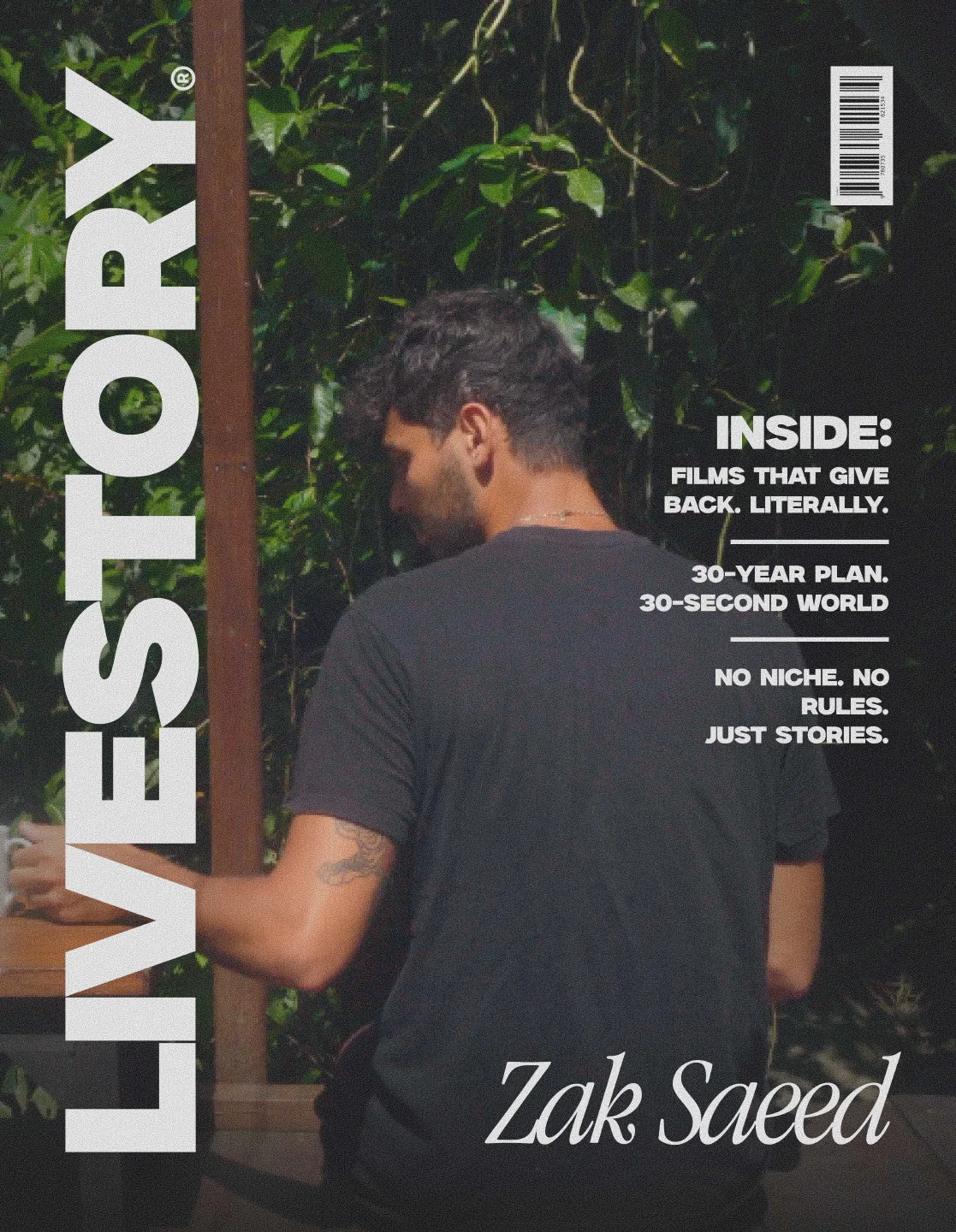
Extended edition
Zak Saeed, Documentary Filmmaker
After the film went out
People started asking what they could do for Leon after they watched Zak Saeed’s documentary. Leon drove a motorcycle taxi in Bali. In the film, Zak followed a man who spent long days taking people around the island and had plans of his own. Some viewers got in touch because they wanted to help him with those plans. Zak organised a fundraiser and told them the money was for Leon to use however he needed.
In July 2025, Zak’s team reported that viewers had given £2,849. Leon went back to Java to see his family. He also began setting up a business taking visitors from Bali to his home island, where he hoped to show them Kawah Ijen. That was the kind of thing the team learnt by keeping in touch. The documentary had introduced Leon to people who would probably never have taken a ride with him. What happened after it went out had as much to do with what Leon wanted for himself as with what Zak could do with a camera.
Zak had spent years working out how to get a viewer to care about the person on screen. Here were people asking him a new question about a finished film. They’d seen it. How could they help? He began thinking about what could happen if his crew made time for a relationship to continue after the edit was finished. He called the project he wanted to build Stories From Earth.
Hostels at eleven
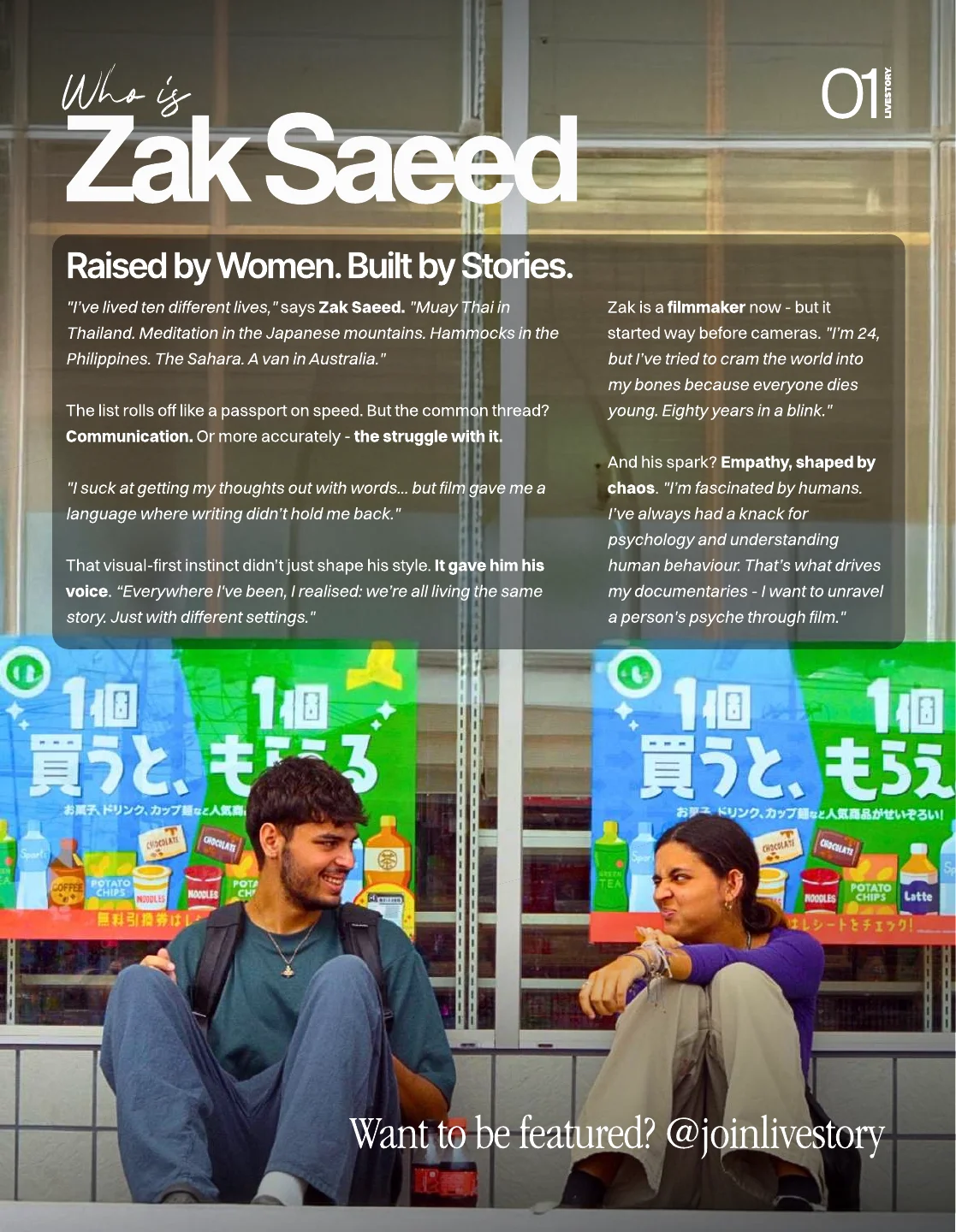
Zak’s mum took him to stay in hostels in Thailand when he was eleven. He grew up with two sisters, aunties and a grandmother. The woman he looked to first was his mum, who gave him the freedom to find things out for himself and expected him to learn from his mistakes. He remembers her making the world feel like somewhere worth exploring. Years later he would train in Muay Thai in Thailand, sleep in a hammock on a beach in the Philippines and travel across Australia in a van. He’d started learning to arrive somewhere unfamiliar long before he had a film to make there.
At home, he had Muslim relatives and Christian relatives. He remembers both treating him with the same warmth and found the differences people drew between them difficult to square with that experience. He went on to study psychology and neuroscience in London. He was interested in what people were trying to do, how they made sense of a setback and where they found a way through it. A film gave him somewhere to spend time with those questions.
When Zak sent us his notes on the magazine, he wanted to dwell on what it had been like to be raised by women. He felt able to pay attention to his emotions and to what other people were feeling, and he drew a line from that to the men he wanted to film. It mattered to him that a man could say he was finding something hard and have space to finish the thought. In his written response, Zak said, “I would not be the filmmaker I am today, if I wasn’t raised by women.” He had also had to learn to talk about his own failures.
What he could do with a GoPro
At nineteen, Zak helped start a Facebook ads agency. It was his first business and he thought they’d found the thing that would change his life. His business partner had the money to back it and told him he could see no reason to keep him on the team. Zak remembers crying. It took him a while to see the conversation as something he could learn from. Once he did, he wanted to get good at a skill he could take with him, whatever happened to the next company.
He talks about feeling stuck when he tried to get an idea out in writing. He is dyslexic, and in his answers for the magazine he apologised in case we had trouble following his train of thought. He wanted the issue to keep that part of his story because it helped explain what happened when he picked up a GoPro. He could take a picture, use a sound and put the pieces next to each other. There was a way to show what he had in mind. In his notes, he described the relief of finding a language where writing no longer held him back.
At first he made vlogs. He tried making them more cinematic, travelled with a camera and started talking to people he met. He tells beginners to give themselves years to try different things. It took him roughly three years of making videos before the conversations, the travel and his interest in pictures felt like parts of the same work. Even then, the sort of film he wanted to make could mean spending far longer on a project than he had before. He’d found something he wanted to get better at, and he was prepared to give it time.
Zak still has days when he thinks about doing something else. His dad had wanted him to become a doctor, an idea he jokes about returning to when filmmaking feels like a lot to take on. Over time he’s found that a walk or a spell away from the work can do more for a stalled idea than another afternoon trying to force it. When he comes back he has a chance of seeing the problem differently. He finds it easier to take that time when he remembers how long he’s prepared to spend learning to make the work.
The person under the helmet
The film about Leon is called The Secret Life of a Grab Driver in Bali. It looks at an island visitors know from holidays through the working day of someone they might meet for the length of a ride. In the fundraiser, Zak explained that Leon was helping his younger brother through university and spending nights beside his grandmother to look out for her. Details like those tell you where Leon’s time and money go when a ride ends. They also give you a way to understand why setting up work of his own mattered to him.
People sometimes ask Zak how he finds such good subjects. In his replies to us he was amused by the question. He grew up watching films whenever he could and reckons that what stays with him is a character trying to do something. Given time, a filmmaker could find that in the life of anyone. He likes to work out what matters to the person, notice what gets in their way and slow down enough for the viewer to understand it. A conversation with a driver could keep opening up long after he’d learnt where the man was taking him. Zak has an idea for a series in which he could go somewhere with a small crew and make each film around one person. He talks about making those documentaries slowly, giving each person enough time on screen to get past the first things a visitor would notice. Even his largest idea starts with the kind of attention he was able to give to Leon.
Making this kind of documentary also means working out what kind of relationship a film crew can have with the person it’s following. With Stories From Earth, Zak wanted to make films and have ways to raise support and go back afterwards, with decisions about what was useful shaped by the people themselves. When we asked him about it, he was still thinking through how to build the team and handle the work behind the scenes. Starting a fundraiser for one person had shown him how much people were willing to give. Staying in touch would take time he had to build into the next project from the beginning.
The films he has in his head
YouTube gave Zak a way to put films in front of people at a point when he was ready to make them. He could film something, edit it and see whether people watched without having to come up through a production company first. It also made him think differently about where an audience might be. At the time of the interview, he said most of his viewers watched on a television. In his mind, somebody could sit down in the evening to watch a documentary he’d published the same way they would put on a film from a studio. That possibility made him want to spend more time getting the sound, colour and camerawork right. For him, filling a television screen with a film that could hold somebody’s attention meant making fewer videos. He wanted to be able to take the time a documentary asked for, even if it meant that a viewer who liked the last one would wait longer for the next.
He can describe the feature he hopes to direct in unusually practical terms. Two and a half hours on screen. Eight months to make it. A team that could stay with the material long enough to get to know the story. He was open to a commission from a streaming platform, and he wanted to keep making documentaries for YouTube. His first camera had let him get started on his own. He wanted to see what he could do with people around him and the time they’d need to work together.
We asked him about the video he made to mark 1,095 days of creating, and whether the milestone changed what he thought was possible. “I’d make movies if no one was watching,” he wrote. He reckoned it could take another twenty or thirty years to get good enough to make the films he already had in his head. In the meantime, he had people to hear from. After the documentary in Bali, his team were still talking to Leon about what he was doing. The story of a man who rode people around one island had taken them to his plans for showing people another.